
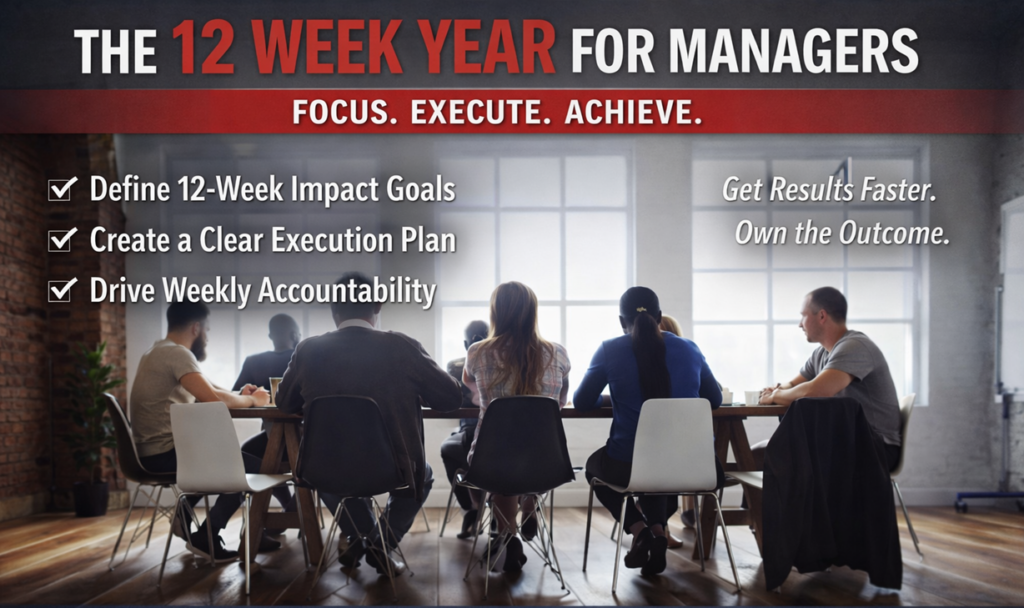
What This Article Covers:
Building a culture of ownership and accountability is one of the most critical drivers of high-performing teams. Effort is not the problem – it’s execution.
—but it’s also one of the most misunderstood. Many organizations focus on performance metrics without addressing the mindset, leadership behaviors, and execution systems that actually create accountability.
In this article, we break down what it truly means to build a culture where individuals take ownership of results—not just responsibilities—and how leaders can reinforce that culture through clear expectations, consistent communication, and structured execution frameworks.
With pressure on managers to be more effective in leading their teams through change, there are also development areas that are not being talked about—accountability and ownership.
A Proven Execution Model for Manager Accountability Training
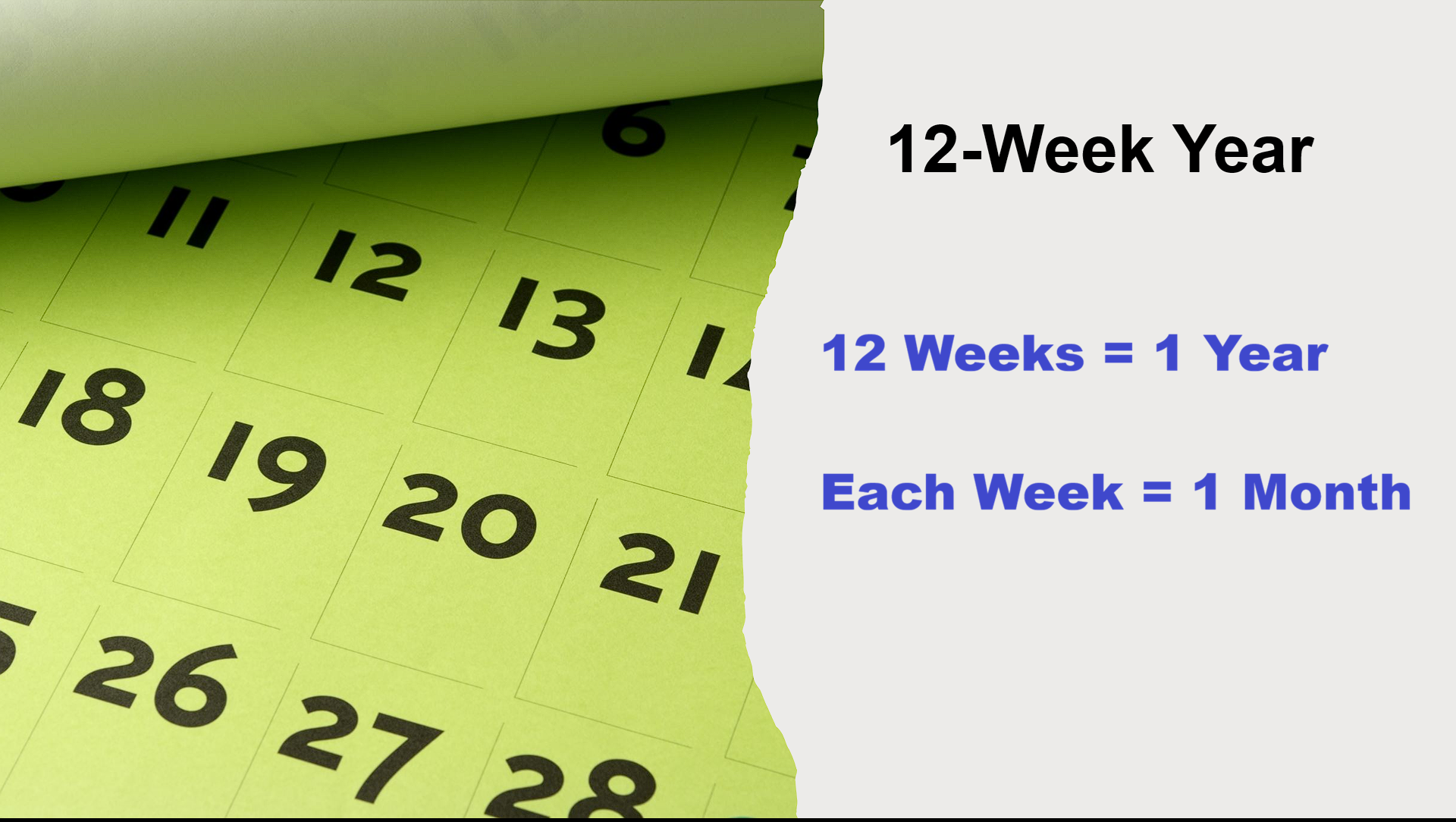
If you aren’t familiar with the 12 Week Year model, unlike traditional goal planning, it focuses on an execution framework based on a short time frame where 12 weeks is treated as a year and each week as a month. It was originally used with professional athletes—where coaches trained individuals in concentrated cycles to prepare for a specific race or outcome. That same discipline has been translated into business.
In practice, your managers define a clear 12-week Impact Goal and with their teams align to it upfront. Rather than keeping plans in their heads, they build a structured, visible plan on paper and then operate against it with weekly accountability. There’s something to be said for this process. There’s understandable discomfort when sharing your goals with others and it naturally evokes healthy competition, where now the stakes are higher.
This execution model we’ll find was always embraced by sales teams and even more so now by leaders who are driving results from any level of the organization.
A leadership accountability training program delivered as a half-day working session
Managers will:
- Define a meaningful 12-week goal tied to business priorities
- Build a clear execution plan with measurable commitments
- Learn how to track performance weekly and course-correct in real time
The outcome is a shift from activity-based management to results-based leadership—where managers take ownership not just for what gets done, but for what actually gets achieved.
If this aligns with what you’re looking to drive this year for your leaders, reach out at school@inrshoes.com.
We’ll share the training agenda and walk through how this could be applied within your organization.
Speak soon,

How is this Accountability Training for Teams?
The 12-Week Acceleration Model is a performance execution system that compresses traditional annual goal-setting into focused 12-week cycles—often referred to as “quarters on steroids.” Instead of spreading priorities across a full year (where urgency fades and execution drifts), this model creates a short, high-intensity window where individuals and teams operate with clarity, urgency, and measurable accountability.
At its core, the model is built on a simple premise: Execution—is what drives results.
And execution improves when timeframes are shorter, priorities are fewer, and progress is visible.
📅 Schedule a call to discuss your organization’s learning and development goals and explore how to build a more emotionally intelligent, future-ready workforce. 1.844.626.3410
Frequently Asked Questions
How is the 12-Week Acceleration Model used in team training?
The 12-Week Acceleration Model is used in team training as a structured execution system that helps teams set a clear 12-week business goal, build weekly action plans, and track accountability. Unlike traditional leadership training, this model focuses on real-time execution, measurable results, and consistent follow-through. It is widely used in leadership development, manager training programs, and corporate performance improvement initiatives to drive faster results.
What are the benefits of 12-week year training for teams?
12-week year training helps teams improve focus, accountability, and execution speed. Key benefits include faster goal achievement, clearer priorities, stronger manager accountability, and improved team performance. By compressing timelines into 12-week cycles, organizations eliminate procrastination and create urgency, making it one of the most effective performance acceleration training methods for modern teams.
Who should attend a 12-week execution or acceleration training?
This training is ideal for managers, team leaders, and cross-functional teams responsible for delivering measurable results. It is commonly used in corporate leadership training, government workforce development programs, and organizations looking to improve execution discipline and accountability across departments.
Can the 12-Week Acceleration Model be used outside of sales teams?
Yes, the 12-Week Acceleration Model is highly effective across multiple business functions including operations, HR, IT, finance, and project management. Any team responsible for achieving measurable outcomes can apply this model to improve execution, alignment, and performance results.
How do managers reinforce accountability after the training?
Managers reinforce accountability by leading weekly execution meetings, reviewing team commitments, and tracking progress using a scoring system. This ongoing cadence ensures that teams stay aligned to their 12-week goals and continuously improve performance. Manager involvement is critical to sustaining results and embedding a culture of accountability.
How quickly can organizations see results from a 12-week training program?
Most organizations begin to see measurable improvements within the first 2 to 4 weeks. Because the model emphasizes weekly execution and real-time tracking, teams generate momentum quickly and can adjust strategies immediately, making it one of the most effective corporate training programs for rapid performance improvement.
Is the 12-Week Acceleration Model suitable for virtual or hybrid team training?
Yes, the model is highly adaptable and works effectively in virtual, in-person, and hybrid training environments. Many organizations deliver 12-week execution training through live virtual workshops combined with digital tracking tools, making it scalable for distributed teams and remote workforces.
About Us
In Our Shoes® partners with organizations to design and deliver corporate manager training programs, leadership development, and AI workforce transformation programs.
