
What This Article Covers:
This article explores the real reason organizational change stalls because people are processing uncertainty and a loss of control rather than just a new business process. You will learn how to use the Social Styles framework to recognize the distinct communication needs of Drivers, Expressives, Amiables, and Analyticals so you can flex your approach to meet them where they are. The post also reveals how our own communication habits inadvertently create resistance, how to identify and empower natural change agents on your team, and how experiential workshops like our recent program with Moody’s Ratings give leaders practical tools and reflection resources to navigate real conversations before the next major shift arrives.
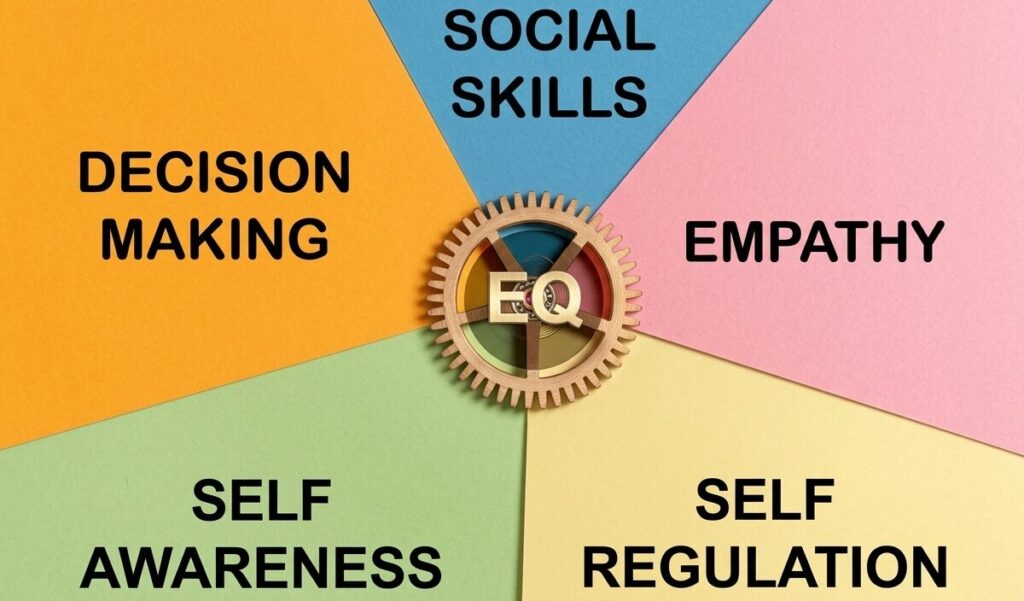
Change is constant, and it always embodies both a logical and an emotional component. While leaders may fully understand the business rationale for a change, they can still encounter hesitation, frustration, or resistance—both in themselves and in others.
In a recent facilitated workshop, Leading Through Change, held for leaders at Moody’s Ratings at the World Trade Center, we asked participants to explore their default Social Styles and look closely at their communication EQ leading team through change.
When organizational change hits, leaders are often focused on the logic: the business rationale, the timeline, and the new process. But their direct reports are often processing something else entirely: uncertainty, a loss of control, and questions about what this transition actually means for them.
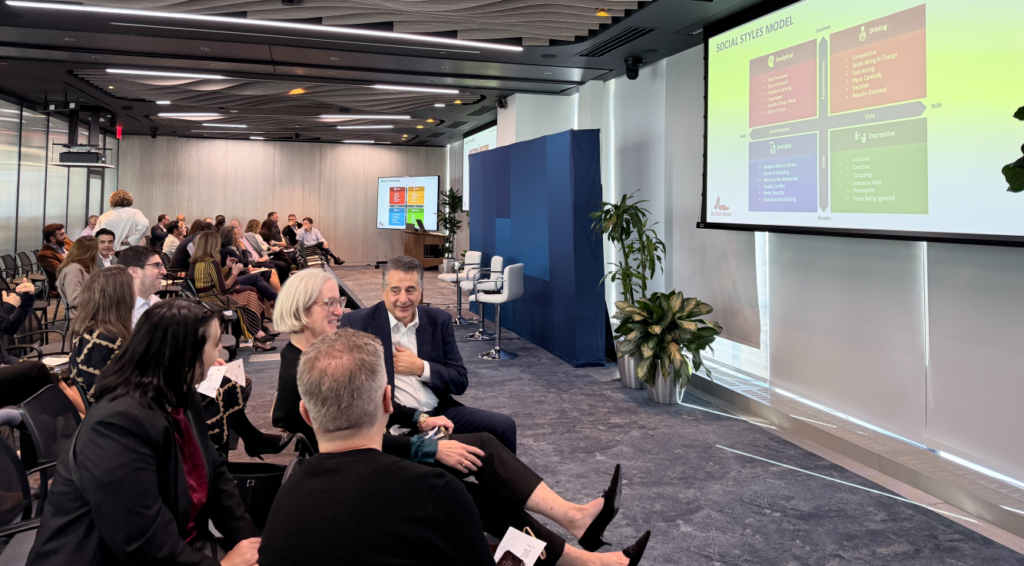
In Our Shoes Workshop – Moody’s Ratings – World Trade Center
Same Change, Four Very Different Communication Needs
During our workshop, we used the Social Styles model as a practical way to help leaders think about how different employees receive and respond to change. The goal was not to label people; it was to help leaders become far more intentional about how they communicate.
There is no single “best” style—each brings distinct strengths and potential blind spots:
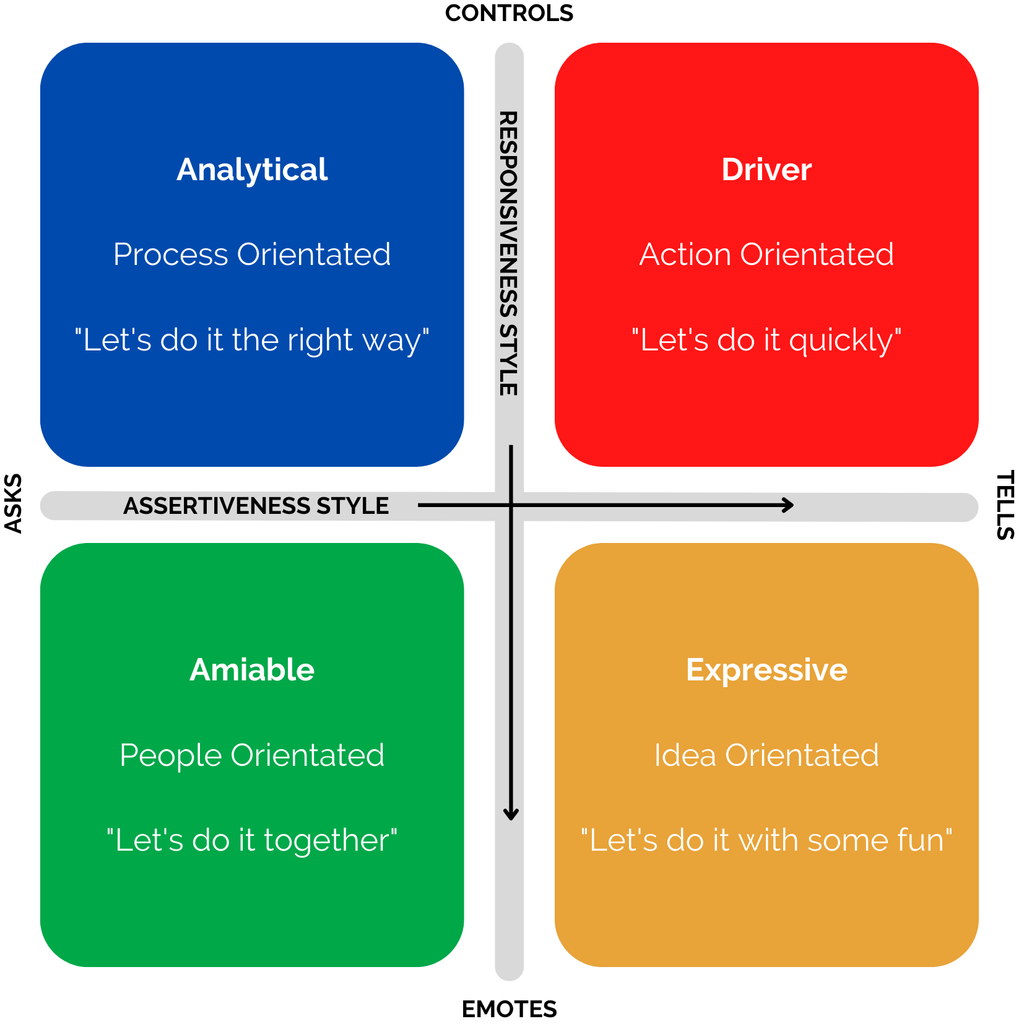
The Driver: They want direction, results, speed, and autonomy. They respond better when a leader is concise and focuses directly on outcomes, choices, and next steps.
The Expressive: They want to understand the bigger picture and the possibilities ahead. They respond well when invited into the vision and given a genuine opportunity to contribute ideas.
The Amiable: They are thinking about stability, support, and the human impact on people. They need open dialogue, reassurance, and clarity about what support will be available.
The Analytical: They want rationale, evidence, process details, and time to ask questions before fully moving forward.
Same change. Same overall message. Very different communication needs.
How Well Can Your Leaders Flex?
Flexing means asking yourself a simple question: How does this person need me to communicate so they can understand the change, process it, and move forward?
Effective leaders don’t spend their energy thinking about what they need to say. They think about how the other person needs to hear it.
Flexing might mean becoming brief and concise with one employee, while giving another employee more time to process. It might mean explaining the business rationale in greater detail, acknowledging a concern instead of immediately trying to solve it, or connecting the change back to a larger purpose for those who need to see the bigger picture.
Where Am I Creating Resistance?
It is easy to assume that resistance sits entirely with the employee. Sometimes it does. But often, our own communication style contributes to that resistance as well.
We might be moving too quickly, overexplaining, being too vague, or avoiding a difficult question. In coaching sessions, leaders frequently share that they jump right into providing technical details when someone really needed clear direction, or push for immediate action before someone has had enough time to process what is happening.
A key learning outcome from our Moody’s session was helping leaders recognize how team members react when communication is unclear, rushed, or misaligned—and learning how to respond to skepticism and questions without becoming defensive or overexplaining.
Practice with Real People and Real Change
Leadership development must get as close to actual day-to-day work as possible, or it simply won’t stick. It is easy to discuss change management conceptually. It is much harder to navigate the specific conversation with the employee sitting across from you next Tuesday.
Instead of keeping the conversation theoretical, leaders should work through the actual people and changes they are currently navigating by considering:
Who are the potential change agents on my team?
- What Social Style might they have?
- How can I flex my communication with that specific individual?
- What do I need or want them to do as a result of the change?
- How can I motivate them to help move the change forward?
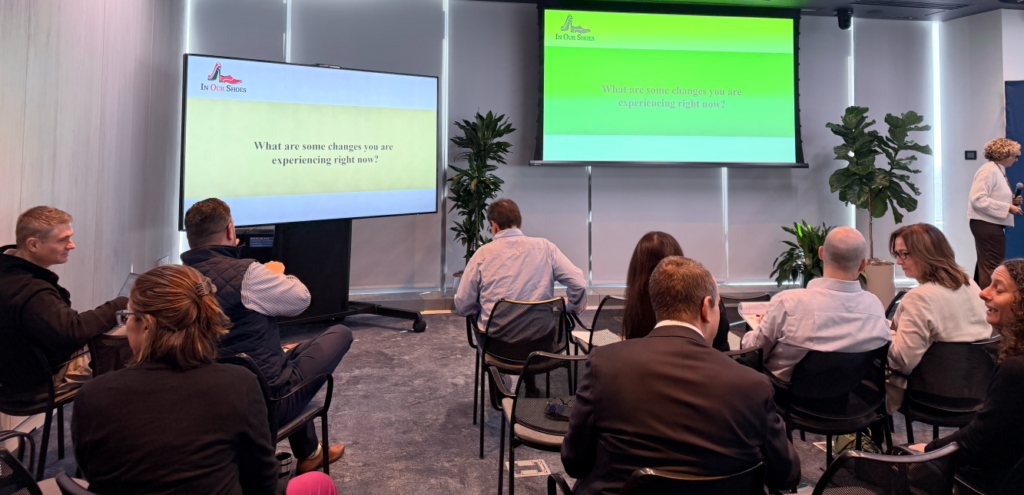
During our Moody’s program, leaders participated in paired discussions and “real play” scenarios based on upcoming, real-life changes. The closer practice gets to a real conversation, the more useful the learning becomes.
Who Are the Change Agents Sitting on Your Team?
Change leadership does not need to sit entirely on the shoulders of the manager. Look around your team: who can help move this change forward?
Some employees naturally create momentum and build trust across departments. Some understand the granular operational details, while others bring energy and optimism. Helping managers identify those key people and communicate with them in a way that taps into their strengths makes change feel much less top-down.
Learning shouldn’t end when a workshop does
Download our cheat sheet and reflection worksheet on how your leaders can communicate change using the Social Styles.
Leadership development is a new conversation. That was the focus of our program with Moody’s Ratings—and it is a conversation I believe more organizations should be having before the next major change arrives.
At In Our Shoes, we design experiential leadership development experiences that help leaders work through the practical challenges—communication, conflict, and leading through change among them.
Who do you need to approach differently?
To learn more about manager development programs, reach out for a course catalog.
Leadership Development Training |Executive Coaching | Everything DiSC | AI Training

Frequently Asked Questions
What is communication EQ leading team through change?
Communication EQ is the ability to recognize the emotional and psychological needs of your listeners during periods of organizational change, allowing you to flex your tone, structure, and delivery so your message builds trust and clarity.
How does the Social Styles model reduce resistance to change?
The Social Styles model helps leaders categorize communication preferences into four primary archetypes: Driver, Expressive, Amiable, and Analytical. Understanding these preferences helps leaders deliver information in a structure that matches how each individual processes uncertainty.
About Us
In Our Shoes® partners with organizations to design and deliver leadership development, manager coaching, and AI workforce transformation programs. Our team has delivered training across industries for executives, directors, managers, and high-potential talent, and is certified in Everything DiSC® facilitation, change management, and AI-enabled learning design.
